行业知识
How to Choose PCB Substrate Materials for Different Electronic Products?
In the internal world of electronic devices, PCB (Printed Circuit Board) is like the transportation network of a city, and the substrate material is the "foundation" of this network. It not only provides physical support for electronic components but also determines signal transmission efficiency, heat dissipation capacity, and environmental adaptability. From smartphones to satellite payloads, PCBs made of different materials undertake vastly different missions.
I. Basic Composite Material: FR-4
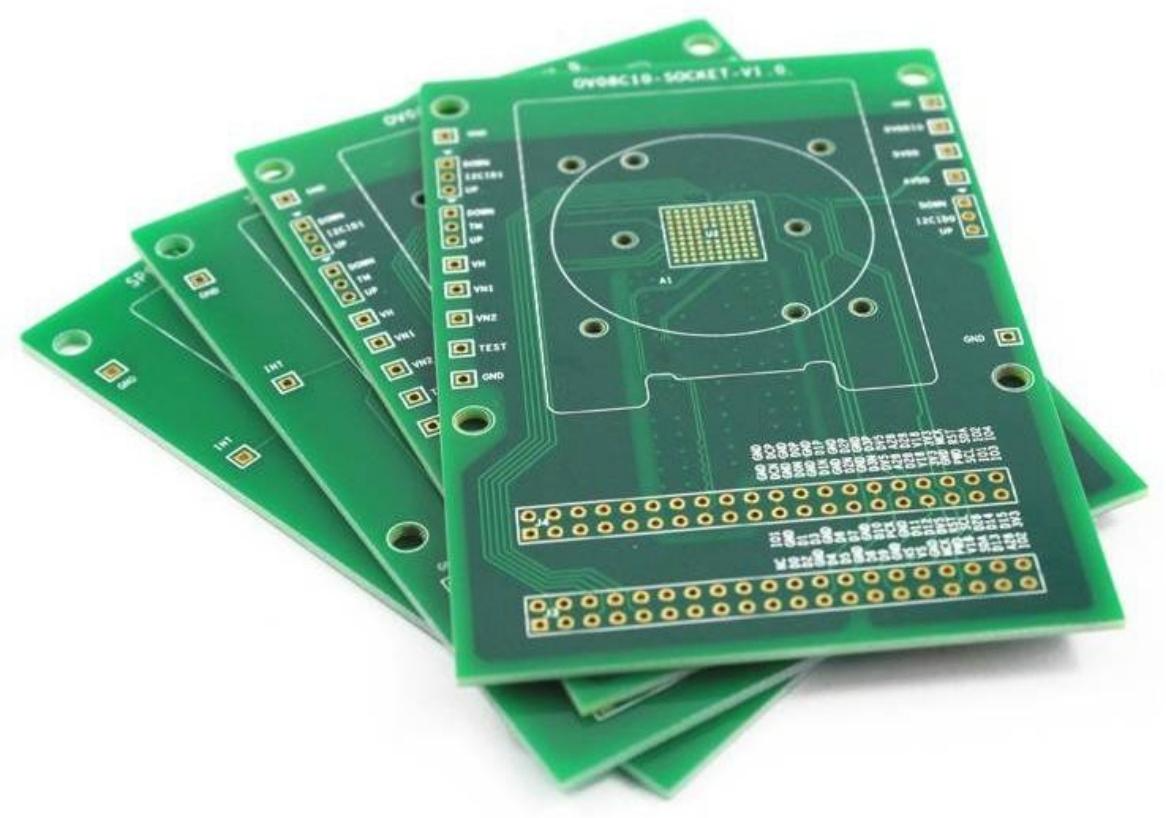
FR-4 (glass fiber reinforced epoxy resin) accounts for over 70% of the global PCB substrate market, with its core advantage lying in the balance between cost-effectiveness and comprehensive performance. Formed by laminating woven glass fiber cloth with flame-retardant epoxy resin, it has a dielectric constant of approximately 4.4 (at 1GHz), a glass transition temperature (Tg) ≥ 120℃, and can withstand conventional reflow soldering temperatures (240-260℃). It boasts excellent mechanical strength (flexural strength > 415MPa) and a water absorption rate of less than 0.1%, ensuring stability in humid environments.
However, FR-4 has limitations: dielectric loss (tanδ≈0.02) at high frequencies causes signal attenuation, so material upgrading is required for scenarios above 10GHz. Its derivatives such as high-Tg FR-4 (Tg>170℃) are used in automotive engine control modules, while halogen-free FR-4 complies with environmental directives (e.g., RoHS) to avoid releasing brominated toxins during combustion.
CEM-3 (composite epoxy substrate) is an economical alternative to FR-4, costing 30% less but with slightly weaker heat resistance and mechanical strength. It is commonly used in lighting control boards and home appliance motherboards.
II. Special Performance Materials
1. Metal Substrates: Dominators in Heat Dissipation
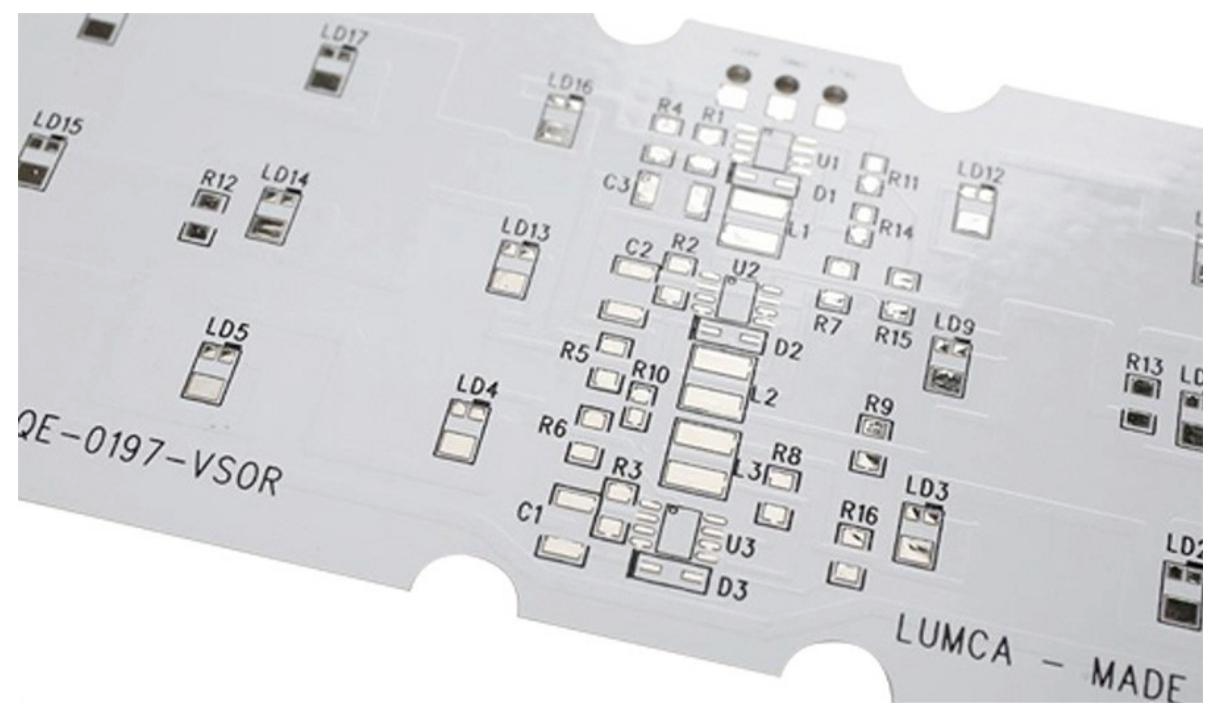
Metal-core PCBs (e.g., aluminum substrates) are almost irreplaceable in the LED lighting field. Their structure consists of "copper circuit layer - insulating layer - metal base". The thermal conductivity of aluminum substrates reaches 1-3 W/(m·K), 10 times that of FR-4. When the LED power density exceeds 5W/cm², aluminum substrates can reduce the junction temperature by 40℃, significantly extending the light source's lifespan. Copper substrates have even higher thermal conductivity (>400 W/(m·K)) but cost three times more, specifically used in electric vehicle IGBT modules and laser drivers.
2. Ceramic Substrates: Ultimate Solution for High Frequency and High Temperature
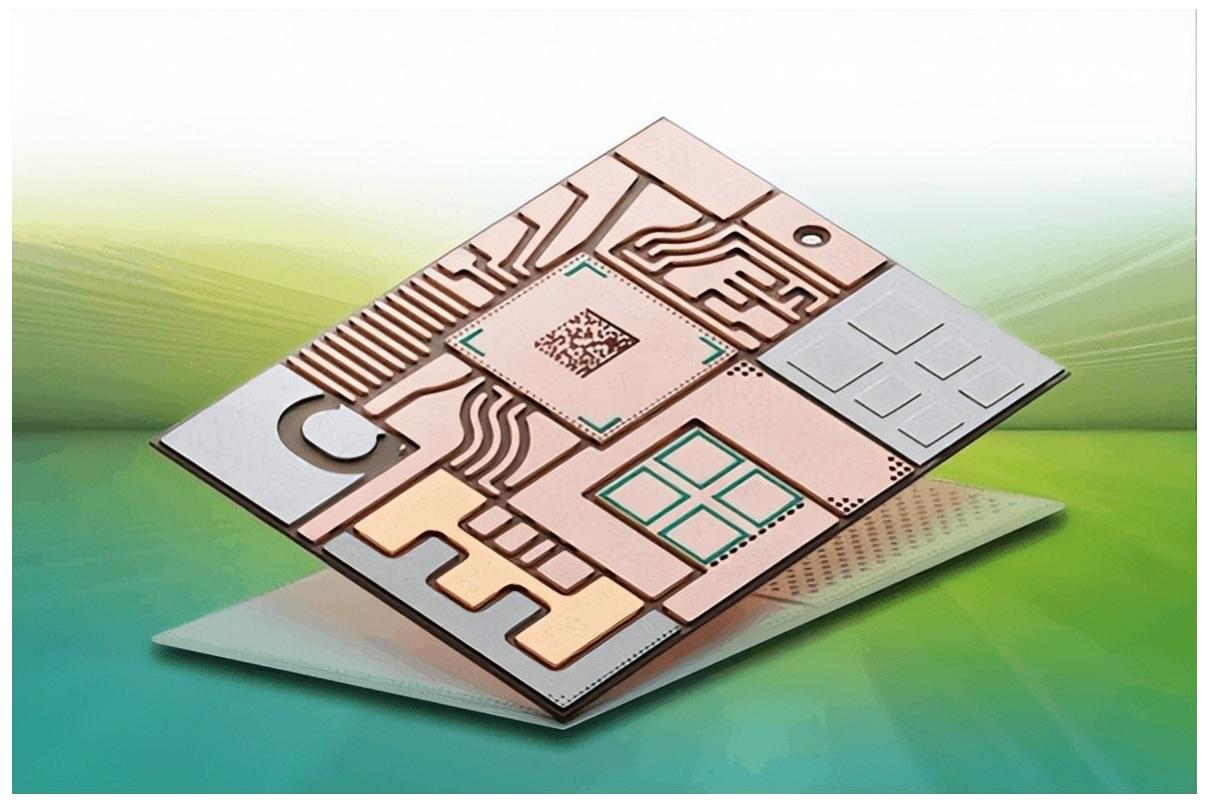
Aluminum oxide (Al₂O₃) and aluminum nitride (AlN) ceramic substrates have become the first choice for extreme environments due to their ultra-low coefficient of thermal expansion (CTE≈4.5 ppm/℃) and high insulation strength (>15 kV/mm). AlN has a thermal conductivity of up to 170 W/(m·K), used for heat dissipation of gallium nitride power amplifier chips in 5G base stations; zirconia-toughened alumina (ZTA) is applied in radiation-resistant power modules of spacecraft, withstanding temperature differences from -180℃ to 500℃.
III. Revolution of Flexible Materials: From Polyimide to LCP
1. Polyimide (PI): Cornerstone of Flexible Circuits
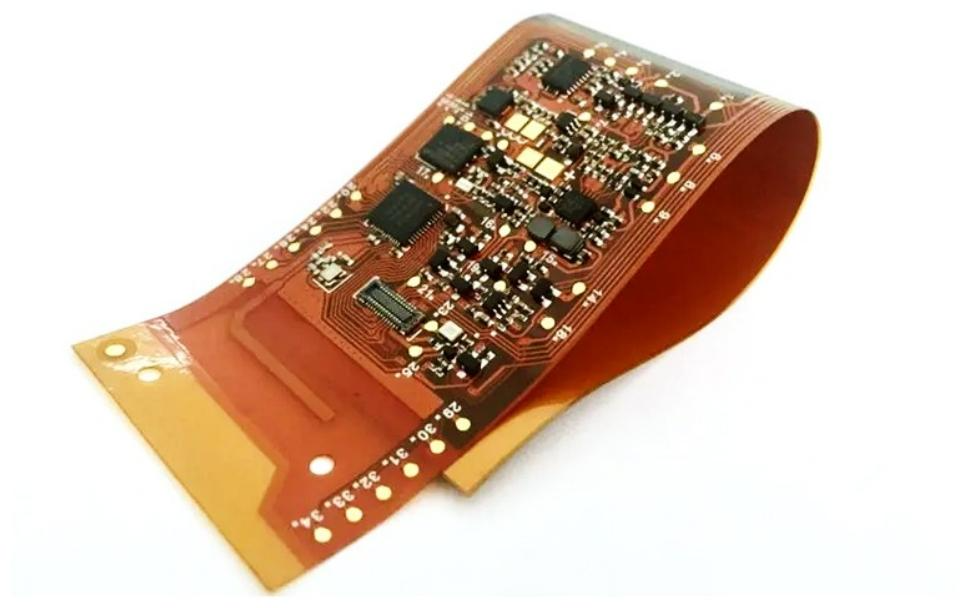
PI films (e.g., DuPont Kapton) operate across a temperature range of -200℃ to 300℃, with a tensile strength >231 MPa, and can be bent repeatedly more than 100,000 times. Its coefficient of thermal expansion (CTE≈16 ppm/℃) is close to that of copper, avoiding delamination risks under temperature cycling. However, PI has a relatively high moisture absorption rate (2.5%) and requires baking to remove moisture before soldering. It is widely used in:
- Hinge area circuits of foldable phones (e.g., the 20-layer PI substrate in Samsung Galaxy Z Fold)
- Mars rover wiring harnesses (resisting -130℃ extreme cold and sand wear)
- Cardiac pacemaker leads (biocompatible coating prevents tissue rejection)
2. LCP: "Supercar Material" of the 5G Era
Liquid Crystal Polymer (LCP) is revolutionizing high-frequency flexible circuits. Its dielectric constant (Dk=2.85@1GHz) and loss factor (Df=0.0025) are far superior to PI (Df≈0.02), with a moisture absorption rate <0.04%. The antenna module of iPhone 13 adopts LCP substrates, reducing millimeter-wave (28GHz) signal loss by 60% and achieving a rate of 3.5Gbps at a transmission distance of 3m.
IV. High-End High-Frequency Materials: "Track" for 6G and AI
1. Polytetrafluoroethylene (PTFE)/Teflon
PTFE has a loss tangent of only 0.001 (at 10GHz), with almost no signal attenuation. Combined with ceramic fillers (e.g., Rogers RO3000 series), it can work stably in the 77GHz automotive radar band. However, PTFE is difficult to process: its coefficient of thermal expansion reaches 300 ppm/℃, requiring special plasma activation treatment to ensure copper foil adhesion.
2. Glass Substrates: Core of Next-Generation Packaging
Intel plans to mass-produce glass substrate PCBs in 2025 for AI chip packaging. Its advantages include:
- Ultra-low deformation: coefficient of thermal expansion of 0.5 ppm/℃, 10 times lower than organic substrates, compatible with silicon chips;
- Nano-level flatness: surface roughness <0.1μm, supporting 2μm line width/spacing wiring;
- Excellent wave transmission: dielectric constant of 5.1, loss tangent of 0.0004@100GHz. Glass substrates will first be applied in GPU and HBM memory stacking to solve warpage issues in 3D packaging.
Summary
Choosing PCB substrate materials is a precise balance of electrical performance, mechanical strength, and cost control. From the market-dominant FR-4 to ceramic substrates for extreme environments, from polyimide in foldable screens to LCP materials for 6G communication, each type of material is the optimal solution for specific needs. In the future, with the popularization of 3D heterogeneous integration and terahertz communication, ultra-low loss and ultra-high thermal conductivity will become the defining indicators of next-generation materials.
新闻
联系我们
深圳方晟醇和科技有限公司
手机: 86 13428289130
电话: 86 13428289130
邮箱: overseas@fangshengtech.com
地址: 深市宝安区石岩街道塘头社区松白公路西侧宗泰电商科创园B308